30 April 2025 Corporate Transformation with Artificial Intelligence: Strategies and Applications

In a time when the pace of change is accelerating rapidly, entities must continuously evolve their ways of working to remain competitive amid disruptive technological, sociological, and economic dynamics. Those that recognise this necessity must manage transformation across multiple dimensions—work practices, organisational structure, corporate culture, and most importantly, enhancing the value of human capital. This is no effortless process. Artificial intelligence stands out as one of the most prominent topics in this context.
With its widely perceived potential, AI is poised to fundamentally reshape many roles and how they are performed. Yet, the question of how remains largely unanswered. It is essential to embed it within the organisational culture and enhance employee productivity in daily workflows to effectively leverage artificial intelligence in corporate environments. Shall we explore a few key strategies to support this transformation?
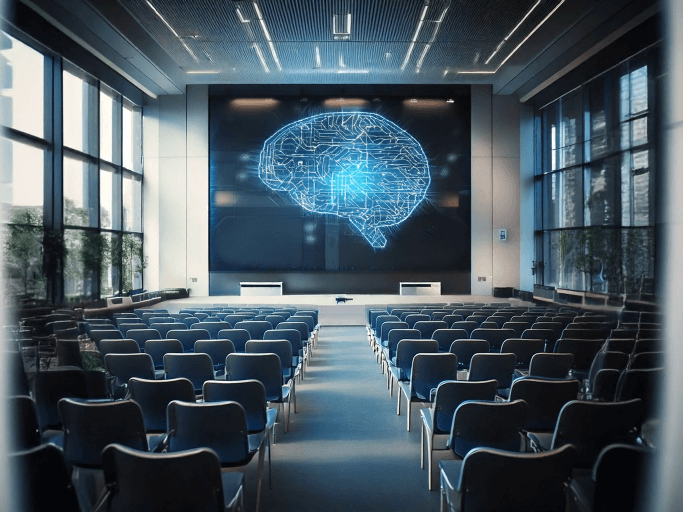
Training and Awareness: Education and accurate information are essential for employees to perceive artificial intelligence as a support rather than a threat. Explaining what AI is, how it works, and which business processes it can enhance—using simple, practical examples—is a strong starting point, but not sufficient on its own. Employees must not only accept it but also take ownership of AI's use to ensure effective integration of it into company processes. For instance, demonstrating a tool that analyses customer data to identify potential leads can help a sales team understand its value. This reduces hesitation and accelerates adoption. Ultimately, the most meaningful progress will occur when employees themselves begin to recognize and act on the opportunities AI presents.
Focusing on Specific Issues: Artificial intelligence is often perceived as a generalized, all-purpose tool—sometimes even assumed to possess genuine intelligence. However, a more effective approach is to focus on sector-and customer-specific solutions tailored to the unique needs of the organisation. For instance, in customer service, chatbots can manage routine inquiries, allowing employees to focus on complex issues that foster meaningful customer engagement. Similarly, in the finance department, AI systems can be implemented to automatically analyse expenditure reports. These straightforward applications deliver tangible benefits and help build initial trust among both employees and management.
Human–Artificial Intelligence Collaboration: It is essential to position artificial intelligence as a complement to employees’ expertise—not a replacement. For instance, while a marketing expert develops creative campaign ideas, AI can analyse their potential impact on the target audience. In this way, human expertise is not diminished but amplified. As emphasized earlier, the most critical step is for each professional to develop the skills needed to effectively apply AI within their area of expertise.
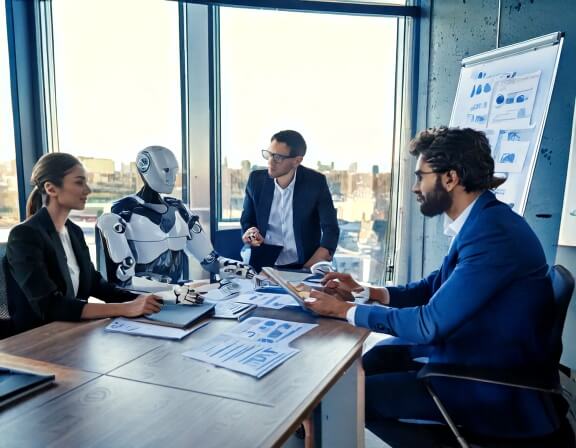
Cultural Adaptation: Leadership plays a pivotal role in embedding artificial intelligence as a core value within the corporate culture. Senior management can reinforce its importance by aligning AI initiatives with strategic objective (such as reducing operational costs or enhancing customer satisfaction) within relevant business contexts.
Further, organisations should encourage the free flow of ideas, support environments open to experimentation and treat initial failures as learning opportunities rather than setbacks to foster a culture of innovation. Creating an environment where employees can consult each other as they progress can work wonders in the adoption of artificial intelligence.
Measurable Results and Feedback: Pilot projects can be launched to assess the impact of artificial intelligence and showcase its outcomes. For instance, an AI tool that optimizes delivery routes in a logistics company may yield measurable benefits such as fuel and time savings. Ownership increases when these results are shared with employees and their feedback is actively considered in refining the system and over time, this fosters a growing inventory where AI can add value across various processes.

Ethics and Transparency: For employees to trust artificial intelligence, it is essential that they understand how its decision-making processes work. A system capable of answering the question, “Why was this recommendation made?” helps demystify AI and fosters broader acceptance. Employees should be well-informed about ethical considerations such as the Personal Data Protection Law, data security, and privacy. Protecting customer and other sensitive information is critical to maintaining trust in AI systems. Training data for AI tools focused on specific topics should be managed according to the “need-to-know” principle to ensure relevance and confidentiality.
In summary, integrating artificial intelligence into corporate life requires a human-centered approach—one that makes employees feel supported in their work and promotes cultural change through leadership.
Considering all these dimensions, we are ready to support you in your AI journey through our Marathon format within Digital Transformation Consultancy. Please contact us for more information.