03 June 2023 User Experience vs. Customer Experience (UX vs CX)

Isn't the user of a product also the customer who purchased it?

Quite right! But of course, sometimes we can buy that product for someone else. So the experience of purchasing a product and the experience of using it can be found in different people.
In the early 1990s, Don Norman (nngroup) defined user experience as follows:
User experience is the entirety of interactions that an end user has with a company, its products, and its services.
The point about the end user here is important. Don Norman emphasises that user experience should concern itself with all points of interaction, but is this how it is implemented today?

Today, when we talk about user experience, we see that the working area is based on a user's interaction with a digital interface. When we look at customer experience, however, we see that the interaction experienced at all points of contact between the customer and the company is taken into account. In terms of origin, customer experience design comes from marketing literature, while user experience design comes more from fields such as technology, design, and psychology. We can explain the difference between these two concepts with the following visual:
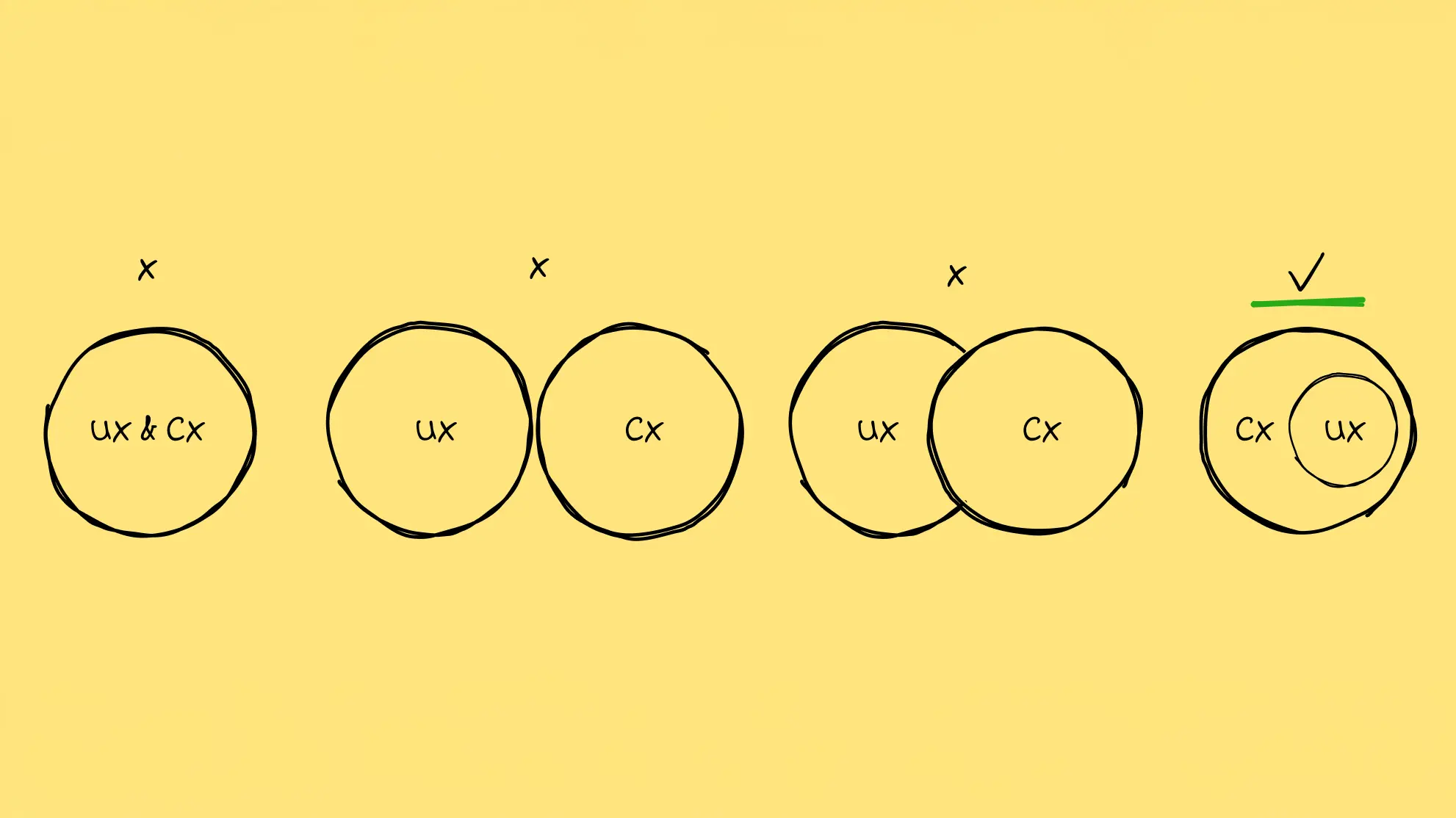
Essentially, UX is part of a broader CX; however, CX includes some aspects beyond a product that UX does not have. So what are these aspects?
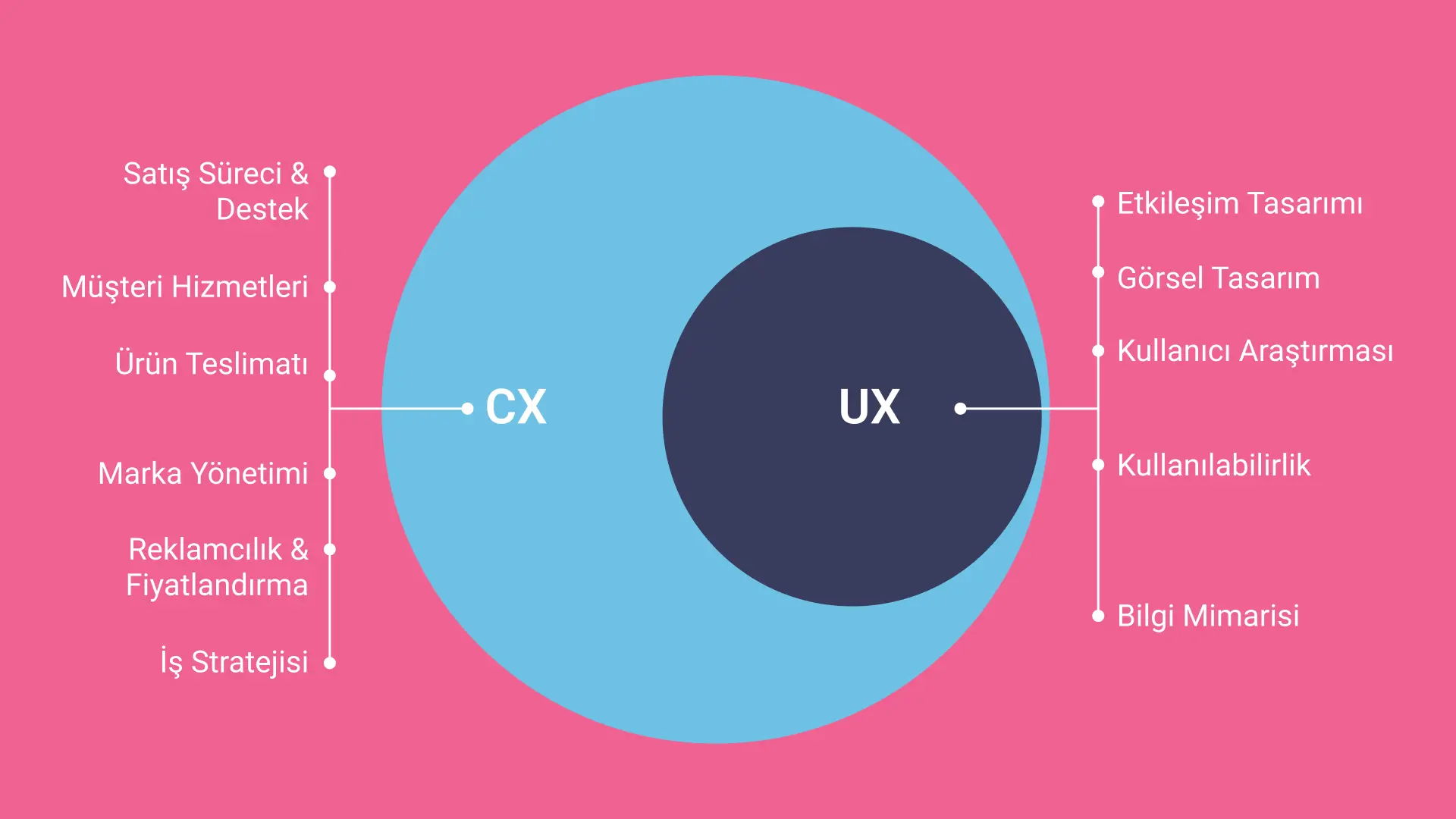
Let us imagine you bought a sofa from a furniture store. From a user experience perspective, your interactions with the sofa—its ergonomics, appearance, ease of assembly and cleaning—define your experience with the product. You may have gone to a furniture store to buy the sofa or ordered it online. You may have then used a delivery or assembly service for the sofa. After purchasing, you may have encountered an issue with your product and contacted the relevant company's call center. When it comes to customer experience, as you can see, we are talking about a holistic experience with numerous touchpoints.

You cannot develop a good customer experience without a good user experience.
At the end of the day, as long as you provide a valuable experience for any interaction with your product, what you call yourself doesn't really matter. The goal in both disciplines is the same: satisfied customers and users!