08 October 2024 Are Market Research and Marketing Research the Same Thing?

Market research and marketing research are often used interchangeably, yet they represent two distinct approaches with different purposes. Both aim to gather data on consumers, competitors, and the market to support companies’ strategic decision-making. However, they differ in the types of data used, their applications, methods, objectives, and outcomes.
This article will highlight the key differences between market research and marketing research, and the specific areas where they diverge.

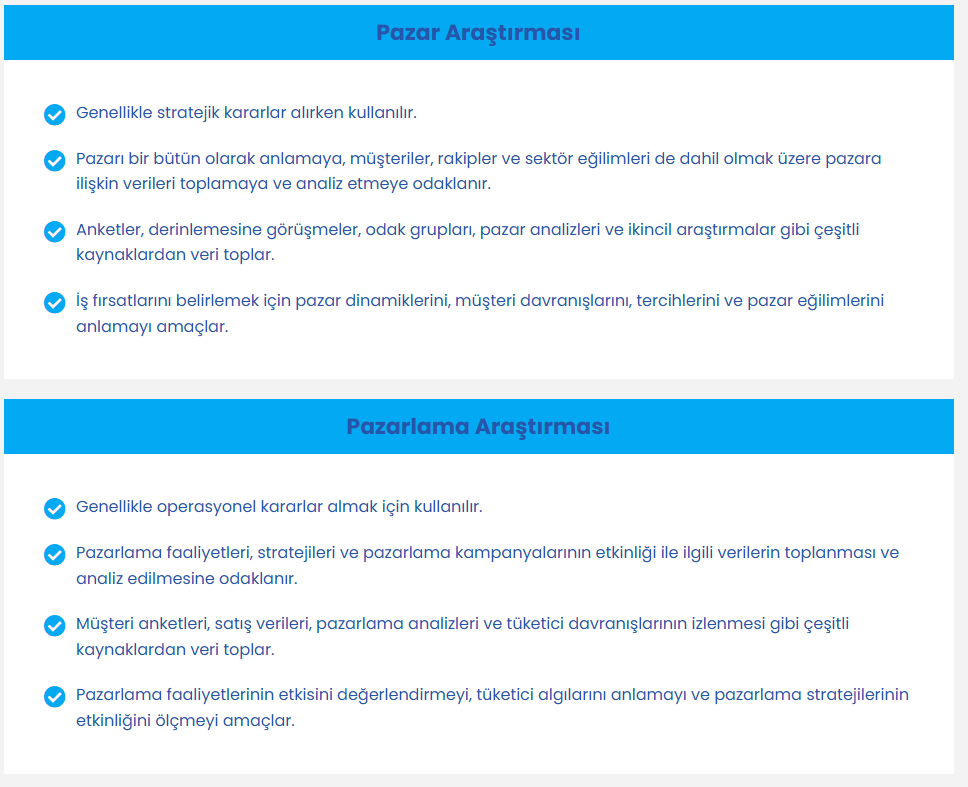
Market research focuses on understanding the overall structure, dynamics, and size of a market. It looks at broad elements such as the target audience, competitive landscape, and levels of demand. In essence, it is a systematic process of examining market trends, competition, consumer preferences, and other relevant factors to gather, analyse, and interpret information about a specific market, sector, or consumer behaviour. Companies looking to enter new markets or strengthen their position in existing ones use methods such as surveys, interviews, focus groups, and data analysis to collect and interpret this data.
On the other hand, marketing research focuses on specific marketing initiatives and evaluates the effectiveness of marketing activities and strategies. It examines elements such as advertising campaigns for products/ services, as well as customer satisfaction performance. It provides actionable insights that support tactical decision-making by concentrating on the optimisation of marketing strategies and campaigns.
Market research generally aims to answer questions such as:
1. What are the potential market opportunities and the overall market size?
2. What are the consumption trends for a particular product or service?
3. Who constitutes the target audience?
4. Who are the main competitors? What is the current market share?
5. Is the success and feasibility of the product or service supported by statistically significant data?
Marketing research seeks to answer questions such as:
1. How do customers perceive products or services, and how do they interact with them?
2. Which marketing campaigns are proving effective? What areas require improvement?
3. What features do customers value most? How can products be enhanced?
4. What are the current purchasing trends? How do several factors influence sales performance?
5. What should the pricing strategy be?
6. Where are the most suitable channels or locations to sell the products?

Both market research and marketing research are essential practices that businesses rely on to answer the types of questions outlined above and many more. While they may sometimes employ similar techniques for different purposes, both ultimately support accurate, data-driven marketing decisions.
In each case, data can be gathered through various methods and sources, typically classified as primary or secondary data collection. Some of these data collection methods, often similar but adaptable to the specific question at hand, include the following: Data collection methods can be classified into two categories, i.e., primary, and secondary:
a) Primary Data Collection:
This involves gathering data directly from the target audience through techniques such as surveys, questionnaires, focus groups, user experience studies, data analysis, and both qualitative and quantitative approaches.
b) Secondary Data Collection:
This refers to the use of existing data sources, including academic publications, official statistics, and publicly available reports.
Regardless of whether it involves market research or marketing research, another key consideration is who will conduct the research. Market research tends to be broader in scope, more time-consuming, and often more costly, requiring a high level of expertise; therefore, companies frequently choose to collaborate with external research firms.
Marketing research, by contrast, focuses on specific elements of the marketing mix such as product, price, promotion, distribution, physical evidence, process, and people. While some of these research are handled internally by in-house teams, businesses may also turn to research agencies, consulting firms, or specialized service providers when external expertise is needed.
When deciding whether to conduct research internally or outsource it, companies should assess their available resources, confidentiality requirements, need for objective evaluation, and the level of expertise required and then choose the most suitable approach accordingly.

In summary, while market research and marketing research are distinct in definition, scope, and purpose, they are complementary tools in the business world. Both play a vital role in helping companies make informed strategic decisions and drive growth. Despite their differences, they ultimately serve the same goal: supporting corporate development.